Rubbish removal in London for homes and businesses

Tommys Rubbish provides rubbish removal in London for households, landlords and workplaces that need unwanted items taken away with care. The service covers everyday clearances as well as bulkier loads, with a straightforward approach to sorting, lifting and disposal. If you want a practical way to clear space without arranging the work yourself, our team can handle the collection and the onward disposal route for the items you no longer need.
We work across a wide range of waste and bulky-item jobs, from general rubbish clearance to specific item collections such as furniture, mattresses and white goods. That means one enquiry can often cover several types of unwanted material at once, provided the load is suitable for collection. Useful preparation is simple: note the kind of items involved, the access to them and whether anything needs to be dismantled before collection. A brief description helps us suggest the right service.
If you are comparing options, pricing and quotes is a sensible place to look alongside the service pages, because the amount, type and handling of items all affect the final figure. For some customers, a single room clear-out is enough; for others, the job is part of a loft, garage or office project. Either way, the aim is the same: an organised removal that leaves you with less clutter and a clearer plan for what happens next. Request a quotation when you are ready.
Household rubbish and bulky item collections
Household clearances often involve mixed items rather than a single category, so the service is designed to deal with that variety without making the process complicated. For example, you may have a broken wardrobe, old boxes, worn bedding and a few bagged household items all ready to go. In those cases, a combined collection is usually more practical than arranging each item separately, especially when access is tight or the items need lifting from an upper floor.
For sofa, bed and mattress jobs, the nature of the item matters as much as the number of pieces. A bulky item can take more handling time than a bagged load, and some items need careful movement to avoid damage in stairwells or hallways. Where a piece is too large to move intact, it may be helpful to separate parts in advance. If you are unsure, you can keep the description simple and ask for guidance before booking. Sofa collection and mattress disposal are common examples of this type of work, but the same logic applies to many other large items.
Common domestic collections
We can help with a range of household removals that often appear together in one visit: old furniture, white goods, loose rubbish, broken storage items and general clutter. Customers often use the service after decorating, moving out, replacing appliances or simply deciding it is time to clear unused things from a room. When the load is mixed, it is useful to think in terms of what is actually present rather than trying to match every item to a separate category. Clear descriptions save time and reduce confusion.
Furniture, beds and appliance disposal

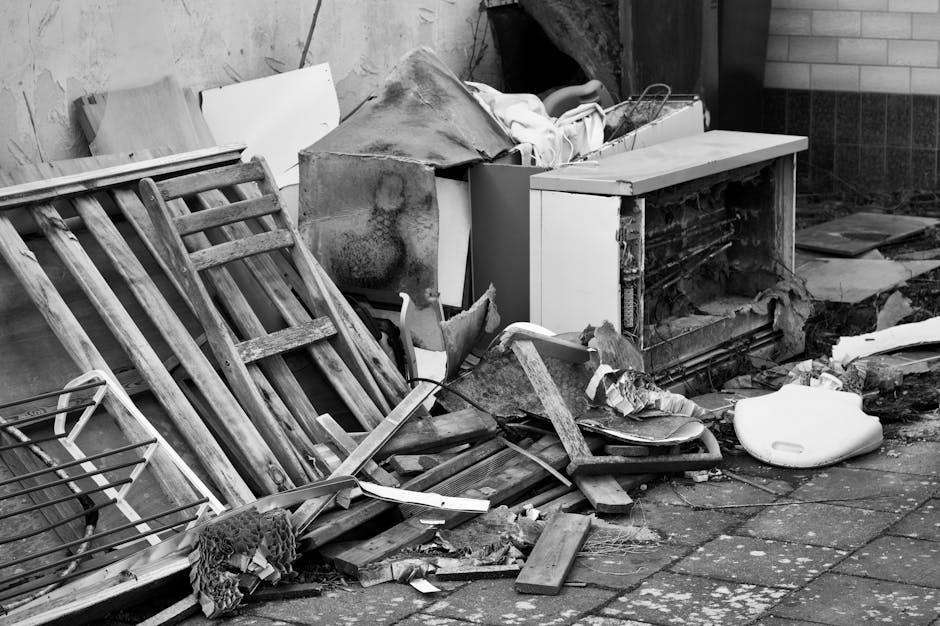
Furniture disposal needs a slightly different approach from mixed rubbish because the items are usually larger, heavier and more awkward to carry. A table, wardrobe, chest of drawers or lounge set may be straightforward once access is clear, but some pieces require careful movement through narrow halls, shared entrances or staircases. We can remove individual items or combine several pieces into one collection, which is often useful when a room is being emptied in stages rather than all at once.
For beds, mattresses and white goods, the key considerations are size, weight and condition. Some appliances are lighter than they look but still awkward because of their shape; others may need a second person to move safely. If doors, drawers or detachable sections can be removed beforehand, that can make the collection easier. The same is true of flat-pack items, which often break down neatly and can be removed more efficiently when separated into manageable parts. See furniture clearance for a broader furniture-focused option, or choose a specific item page when you already know what needs taking away.
We also handle related item categories where a precise destination helps. A single mattress, a sofa and a fridge each present different handling needs, so it is sensible to choose the closest match rather than force everything into one generic label. That approach helps keep the quotation accurate and gives a clearer idea of the work involved. If you are preparing for a clear-out, a short inventory with rough quantities is usually enough to get started.
Home, loft and garage clearances
Full-property and partial clearances are useful when a room, loft, garage or outbuilding has accumulated more than a few isolated items. These jobs often include both rubbish and reusable household pieces, along with forgotten belongings that have simply stayed in place for years. The aim is not just to collect waste, but to remove what is no longer needed in a way that leaves the space ready for cleaning, sorting or the next stage of work.
Home clearance covers situations where several areas need attention at once, while loft clearance and garage clearance are better suited to specific spaces with awkward access or accumulated storage. A loft may involve low headroom and careful movement around insulation or boards, while a garage can contain mixed storage items, tools, bags and old furniture. Because those spaces often hold a combination of item types, it helps to think about accessibility as well as volume. If shelving, bulky storage crates or furniture need to come out first, that should be mentioned when you ask for a quotation.
- Loft jobs may involve narrow access and lighter, bagged items as well as larger boxes.
- Garage clearances often include mixed storage, broken equipment and general household clutter.
- Home clearances can combine multiple rooms, making one planned collection more efficient than several smaller visits.
Office and business rubbish removal

Commercial customers often need rubbish removal for a different reason: the items are linked to an office move, refurbishment, downsizing or a routine clear-out of storage areas. That can include desks, chairs, filing items, packaged waste, small appliances and general office clutter. The work is usually easiest when the collection is planned around the layout of the building, the lift or stair access, and any items that require dismantling before they can be moved safely.
Business waste removal is a good fit when you need an ongoing or one-off solution for trade waste, office refuse or mixed commercial loads. For a one-off clearance, office clearance may be more suitable because it can include furniture, paperwork-related items and redundant equipment in one organised job. We do not treat every business collection as the same, because a back-office cupboard, a reception area and a storage room can each create a different type of load. Matching the service to the actual items helps keep the removal more straightforward.
When you enquire, it is useful to mention whether the collection is from a single floor, a shared building or a space with restricted access. That detail does not just help with planning; it also improves the accuracy of the quotation because time on site depends on how far the items need to be carried and how much handling is involved. If the waste includes monitors, printers or mixed office furniture, say so plainly rather than trying to describe everything separately.
Rubbish clearance for mixed loads and general waste
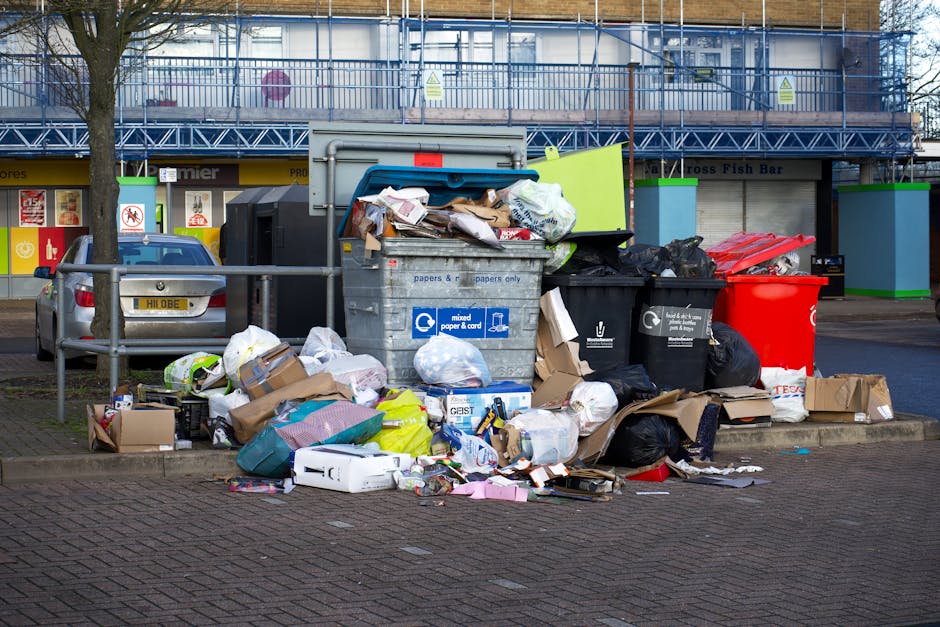
Not every job falls neatly into a furniture, appliance or room-clearance category, which is why general rubbish clearance remains an important part of the service. This is the practical option for bagged waste, broken household items, mixed debris, leftover packaging and assorted materials that need taking away together. It is especially helpful when a job has developed over time and the final load contains several different item types that would be awkward to separate by service.
Rubbish clearance, waste clearance and waste removal all sit close together in this part of the work, but each can be useful depending on what you are trying to clear. Some customers want to remove a single stack of bags, while others are dealing with several bulky items and a scattering of smaller pieces. The important point is to describe the load as accurately as you can so the collection can be matched to it. In many cases, there is no need for a long explanation: a short list of the main item types is enough.
General waste can also arise after decorating, sorting storage, emptying cupboards or tidying a property before sale or letting. The service is built to handle that sort of mixed end-of-job material without turning it into a complicated booking process. If the items are already grouped together, that usually makes the collection simpler, but we can still advise when a load contains awkward pieces that need separate attention.
Garden and outdoor waste collections
Garden clearance is useful when outdoor areas have become cluttered with plant waste, broken containers, old tools, edging, fencing offcuts or general material left over from maintenance. Unlike ordinary household rubbish, outdoor waste can be uneven, damp or contaminated with soil, so it often needs different handling. A tidy garden job usually begins by identifying what is actually there: green waste, hard landscaping debris, damaged furniture or mixed outdoor clutter. That makes the collection clearer and reduces the chance of unnecessary back-and-forth.
Garden clearance can be combined with other item removals if the job includes patio furniture, broken sheds parts or bags of mixed material. Where the waste is mostly natural material, the focus may be on efficient loading and sensible disposal. Where the area includes heavier or sharper items, the handling needs more care. If you are clearing a back garden, front garden or side return, it helps to mention access points and whether the waste is stacked or scattered. That small detail can make a practical difference.
Outdoor work can also involve seasonal clean-ups, post-project debris or the tidy-up stage after landscaping. For customers who have already done the labour of cutting back plants or removing soil, the remaining question is usually how to get the waste out quickly and responsibly. A well-described collection supports that final step without turning the process into a lengthy arrangement.
How quotations are prepared and what affects the price

Quotation work is usually based on the type of waste, the quantity involved, the access to it and the amount of labour needed to move it safely. Two collections that look similar on paper can differ once stairs, distances, lifting difficulty or dismantling are taken into account. For that reason, it is better to describe the job in practical terms than to focus only on the number of items. A clear list of what is being removed makes it easier to match the service to the work.
pricing and quotes can be useful when you want to understand how different factors fit together, especially if the job includes a mix of bulky items and smaller waste. In general, the amount of space taken up by the load, the handling time and the item type matter most. If you are unsure whether something belongs in a disposal or collection category, mention it anyway. We can help you work out the closest fit from the details you provide, rather than expecting you to know the terminology already.
For a smoother quotation process: provide a short item list, mention whether any pieces are upstairs or difficult to reach, and say if the load is already grouped together. That is usually enough for a useful estimate. If you would like to plan ahead, keep the description simple and include anything unusual, such as heavy appliances, broken furniture or mixed commercial waste. Small details often make the biggest difference to accuracy.
About London
London is a large and layered city shaped by the River Thames, centuries of expansion and a pattern of distinct districts that retain their own character within the wider capital. The Roman settlement of Londinium began close to the river crossing that still helps define the city’s geography today, and later medieval, Georgian, Victorian and modern development all added new layers to the street plan. That history is visible in the mix of surviving churches, civic buildings, markets, terraces and purpose-built commercial streets, many of which sit alongside contemporary towers and transport infrastructure. The city’s scale is matched by its variety: the West End, the City, the South Bank, the Docklands and the outer residential districts each have their own identity and pace. The Thames remains a powerful organising feature, with bridges, embankments, piers and waterside paths connecting areas that were once far more separate in daily life. Major green spaces such as Hyde Park, Regent’s Park, Hampstead Heath and Richmond Park provide relief from the density of the built environment, while canal routes and smaller commons add quieter corridors through the urban fabric. London is also marked by museums, theatres, galleries, churches, markets and sports grounds that draw both residents and visitors, and by a transport network that links neighbourhoods through Underground, rail, bus and river services. The result is a city where local character matters: a street in Bloomsbury feels different from one in Wapping, and a market area in Brixton has a different rhythm from a riverside square in Westminster. Even with that diversity, the city shares a clear sense of historical accumulation, with old and new buildings often standing side by side in ways that reveal how continuously London has been rebuilt, adapted and reimagined.
Supported collections for different item types
Some customers already know exactly what needs to go, while others need a broader option that covers more than one category. That is where pages such as furniture collection, bed disposal and white goods recycle can help narrow the job down. Using the nearest match makes it easier to describe the service accurately and avoids the confusion that can happen when a sofa, a cabinet and an appliance are all treated as if they were the same thing. Different item types can also need different loading and handling approaches.
There is a practical difference between removing an item that is still intact and dealing with one that has already been broken down or partly dismantled. Some jobs are better suited to large-item collection, while others fit a more specific page because the handling is simpler and the item type is clear. large-item collection can be useful for oversized pieces that are awkward to move in one go, especially when they are too large for standard bagged waste removal. If a job involves several categories together, we can usually combine them within one quotation rather than splitting them unnecessarily.
Customers often ask how to decide between collection, removal and disposal language. In practice, the wording matters less than the actual description of the load. Whether you call it rubbish, waste or unwanted items, the important thing is to describe the pieces honestly and briefly. That gives a much clearer basis for planning than trying to use the right phrase alone.
Getting the work arranged
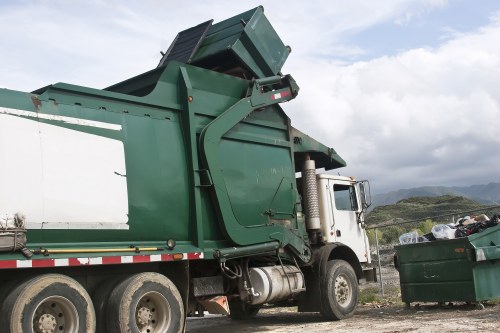
The simplest way to move forward is to identify the main items, the location of the load and any access issues that might change how the collection needs to be carried out. If the items are spread across several rooms or floors, a short note about that helps the enquiry more than a long explanation of why the space needs clearing. We can then shape the removal around the job rather than forcing the job into a fixed pattern. Contact us when you are ready for a quotation.
For many customers, the best next step is to choose the closest service page and use it as a reference point when describing the work. That applies whether you need furniture disposal, garden clearance, office clearance or a mixed rubbish removal. If the load changes before collection day, it is worth mentioning the update so the booking remains accurate. Clear, honest details make for a better quotation. If you prefer, keep your message short and focus on the items, the access and the preferred timing for the collection.
However you label the job, the aim is the same: an organised removal that is suited to the items you have and the place they need to come from. If you need help with a single bulky item or a more involved clearance, start with the service that matches the work most closely and ask for a quotation in plain terms. We will take it from there. Ask for your quote today.