Company team reviewing anti-slavery policy documents

Modern Slavery Statement ??? Tommys Rubbish

At Tommys Rubbish we declare a zero-tolerance policy towards modern slavery, human trafficking and forced labour. This modern slavery statement outlines our approach to preventing exploitation across our operations and supply chain. We are committed to fair, safe and lawful working conditions for everyone connected with our business. Our anti-slavery statement applies to all employees, subcontractors and suppliers who provide services or goods to Tommys Rubbish.

Our Position and Commitments

The Tommys Rubbish modern slavery policy makes clear that slavery, servitude, forced labour and human trafficking are unacceptable in any form. We expect the same high standards from our suppliers and partners. We will not tolerate any practices inconsistent with this stance and will take immediate action when breaches are identified. The policy underlines employee rights, safe working conditions and fair wages across our operations.
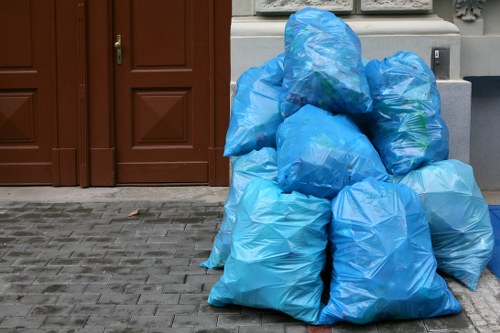
A cluster of several large blue plastic rubbish bags, filled with waste materials, is stacked against a brown wooden door on a paved driveway. The bags are loosely tied at the top, with some appearing more tightly packed than others, and they display slight creases and a matte finish characteristic of standard bin liners. The surrounding environment includes a section of a concrete or stone wall behind the door, and the driveway surface shows a pattern of interlocking bricks or tiles. The scene captures a typical roadside refuse collection area, with natural daylight illuminating the scene evenly. This setup suggests the involvement of a professional rubbish removal service, such as Tommys Rubbish, operating within a residential or commercial locality, possibly in or near a town or postcode within the UK. The bags are positioned in a manner consistent with preparation for collection or disposal, underscoring their relevance to waste management activities in the local community.

Scope and Legal Compliance

We comply with applicable anti-slavery laws and regulations. This anti-slavery statement for Tommys Rubbish covers direct operations and our supply chain, and it sets out risk-based due diligence processes. We monitor recruitment practices, subcontracting arrangements and labour providers to reduce the risk of exploitation. All procurement contracts include clauses requiring compliance with our modern slavery and human trafficking requirements.

Due Diligence and Supplier Audits

Our due diligence framework focuses on supplier audits, risk assessment and ongoing monitoring. We conduct prequalification checks, periodic audits and targeted spot checks to verify compliance. Audit activities are proportionate to risk, with high-risk suppliers subject to more frequent and detailed scrutiny.

A close-up view of various discarded plastic bottles, caps, and containers in different colours including blue, green, yellow, and brown, piled together on a surface. The bottles appear crumpled and are of different sizes, with some still having caps attached while others do not. In the background, there are additional waste materials such as torn paper or tissue and possibly part of a cardboard box. The scene suggests the aftermath of rubbish collection or disposal, typical of waste removal services. The environment appears to be an outdoor area, possibly a driveway or waste collection point near a property in a UK town, with natural lighting illuminating the scene. The presence of different plastic types and colours indicates the importance of proper segregation and disposal, which Tommys Rubbish provides as part of their rubbish removal services across the local area, including regions around postcode XXXX.

We maintain a structured audit programme that includes:

  • Initial supplier risk assessment ??? evaluating geography, industry and labour models.
  • On-site and remote audits ??? verifying documentation, interviewing workers and observing working conditions.
  • Corrective action plans ??? requiring timely remediation for any issues found, with follow-up verification.

Supplier Expectations and Contracts

Suppliers must adhere to our anti-slavery code of conduct. Contracts explicitly prohibit the use of forced, bonded or trafficked labour and require compliance with local labour laws. Where suppliers engage subcontractors, those subcontractors are also bound by our requirements.

Training, Remediation and Worker Support

We provide regular training to staff involved in procurement, operations and site supervision to recognise indicators of modern slavery. Training emphasises safe recruitment practices and how to support affected workers. If exploitation is identified, we implement remediation plans prioritising the victim???s safety and legal rights, including termination of contracts where necessary.
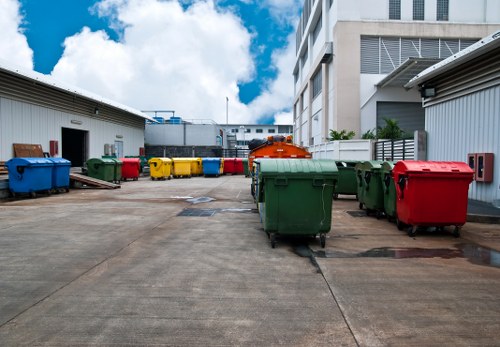
A wide concrete yard area situated between industrial warehouse buildings, with a row of large, wheeled rubbish bins in various colours including green, red, yellow, blue, and black, arranged along the edge of the open space. The bins are made of durable plastic with textured surfaces, and some have closed lids, while others are open or partially open. In the background, additional stacked containers and caged equipment are visible behind the buildings. The sky above is partly cloudy with patches of blue, suggesting daytime weather conditions typical of a commercial or industrial site. The environment appears clean and organized, with the bins set out for waste disposal or collection services, reflecting the type of rubbish management handled by companies such as Tommys Rubbish, serving the area around the postcode region likely near town centers or urban outskirts.

Reporting Channels and Confidential Whistleblowing

Tommys Rubbish operates multiple reporting channels to ensure concerns about modern slavery can be raised safely and confidentially. Employees and third parties are encouraged to report suspicions through anonymous channels or by speaking with designated compliance officers. Reports are investigated promptly, with protective measures for whistleblowers and those at risk.

A young man wearing a yellow safety helmet, high-visibility vest with neon yellow and pink reflective stripes, and purple gloves is standing outdoors in front of a collection of discarded electronic equipment, including old televisions, computer monitors, and printers. The items are placed on a paved surface next to a background consisting of a red wooden shed or container and a white tent or canopy. The man is holding a black electronic device, possibly a keyboard or similar item, and smiling at the camera. The scene suggests a rubbish removal or electronic waste collection context, with visible environmental surroundings typical of a waste management or disposal site, and the location appears to be in an area associated with urban or industrial waste collection within the UK.

Monitoring, Review and Continuous Improvement

We will review this modern slavery statement annually as part of our governance cycle. The review will assess the effectiveness of supplier audits, reporting channels, training and remediation efforts. We will update policies and practices based on audit findings, new legal requirements and emerging risks.

In summary, Tommys Rubbish???s modern slavery statement emphasises a proactive, risk-based approach: prevention, detection, remediation and continuous improvement. We are resolute in our zero-tolerance approach and remain committed to driving responsible practices across our operations and the broader supply chain.

Tommys Rubbish

Tommys Rubbish commits to a zero-tolerance modern slavery policy with supplier audits, confidential reporting channels, remediation, training and an annual review to ensure continuous improvement.

Get In Touch With Us.

Please fill out the form below to send us an email and we will get back to you as soon as possible.